Mitigating the Unexpected Cost Impact of Virtualization: Why CIOs Must Rethink Their Relationship with the Hypervisor

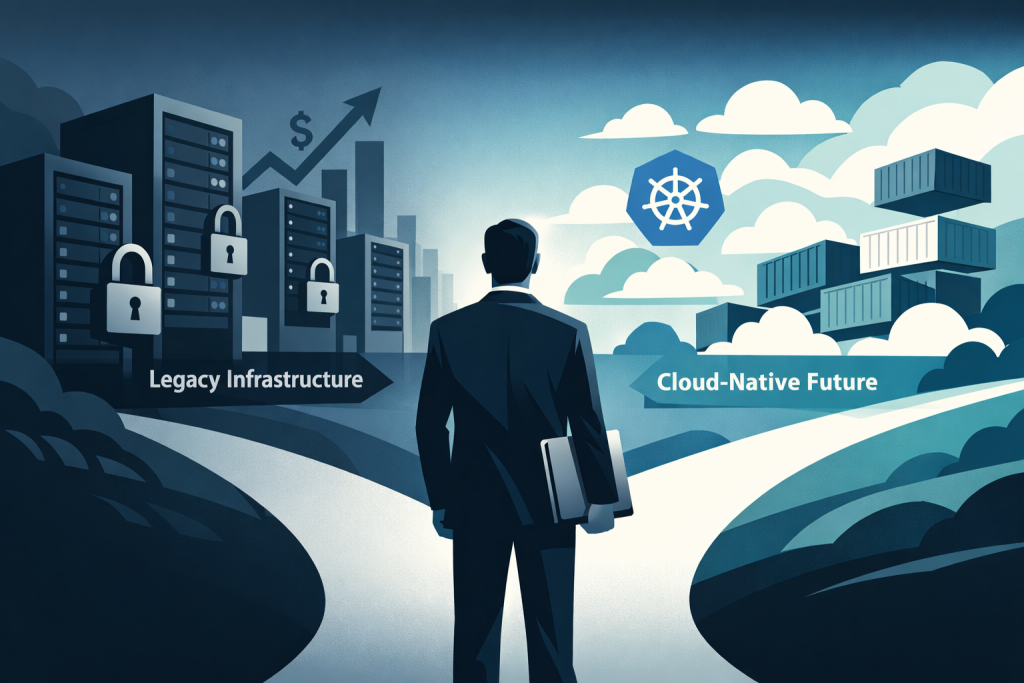
Virtualization has been one of the most transformative technologies in the modern IT era. For two decades, it has quietly underpinned resilience, efficiency, scalability and consistency across enterprise environments. It enabled us to consolidate sprawling server estates, enhance reliability, accelerate provisioning and reduce waste. In many ways, virtualization became the “invisible foundation” that allowed digital transformation to flourish.
But what happens when that foundation begins to shift beneath us?
In our recent CIO WaterCooler digital boardroom, SUSE’s cloud‑native specialist Nelson Kinsford explored this question — and articulated a reality many CIOs are now confronting: virtualization, once the hero of infrastructure, has become a source of cost pressure, risk, and diminishing strategic returns.
His message was clear: it is time for CIOs and IT leaders to reassess their relationship with the hypervisor.
When Innovation Turns Into Interrogation
Nelson’s narrative began by reframing virtualization as a long‑term relationship — one that started with genuine excitement and tangible benefits. Virtualization helped us extract value from under‑utilised hardware, dramatically improve reliability, and modernise infrastructure management through capabilities like templating, snapshotting and automated provisioning.
But over the past two years, this relationship has soured.
Acquisition‑driven uncertainty has reshaped licensing models, reduced support, introduced mandatory bundling, and—most importantly—inflated the cost base. Kinsford described a shift away from partnership into something more akin to interrogation: vendors demanding exhaustive core counts, imposing rigid contracts and pushing organisations into features and platforms they neither requested nor needed.
For CIOs, the consequences have been real: innovation budgets frozen, transformation paused, and investment redirected simply to maintain operational continuity.
This is not sustainable—not strategically, not financially, and not operationally.
The Hidden Cost: Innovation Paralysis
What often gets missed in conversations about infrastructure is the indirect opportunity cost. Every increase in licensing spend to “keep the lights on” is a pound not spent on:
- Cloud optimisation
- Developer enablement
- AI adoption
- Modernisation programmes
- Experience transformation
The Case for Open Source as a Strategic Reset
1. Avoiding Lock‑In
2. Extending the Life of Existing Investments
3. Unifying the Future with the Present
4. Talent Strategy Becomes Simpler
Sovereignty and Supply Chain Risk Are Entering the Conversation
- the business is not dependent on a single geography,
- the software supply chain remains transparent, and
- strategic autonomy is preserved.
Three Steps Toward a Better Model
1. Deploy a modern, open virtualization platform
2. Start with the low‑risk, easy‑to‑migrate workloads
3. Breathe — and reallocate innovation capital
Why This Moment Matters
- Licensing changes will accelerate.
- End‑of‑life deadlines (not least for vSphere 8 in 2027) are fixed.
- Support models will continue to evolve.
- Innovation demands will not slow down.
In5 Takeaways for CIOs
-
Reassess virtualization through a risk and cost lens, not a comfort lens.
Behavioural inertia is no longer a strategy. -
Adopt open‑source infrastructure to restore control and portability.
This future‑proofs the estate without mandating a rewrite of everything. -
Unify VM and container strategies rather than treating them as competing domains.
This reduces operational overhead and accelerates modernisation. -
Protect innovation budgets by reducing dependency on proprietary pricing cycles.
Stability in cost creates stability in transformation. -
Start the transition early — before deadlines force your hand.
Strategic timing is only possible before the clock runs out.


Responses